

The Epic of Gilgamesh
Updated: Mar 5
An ancient epic retold through the banter of good friends, Evadine and Enki.

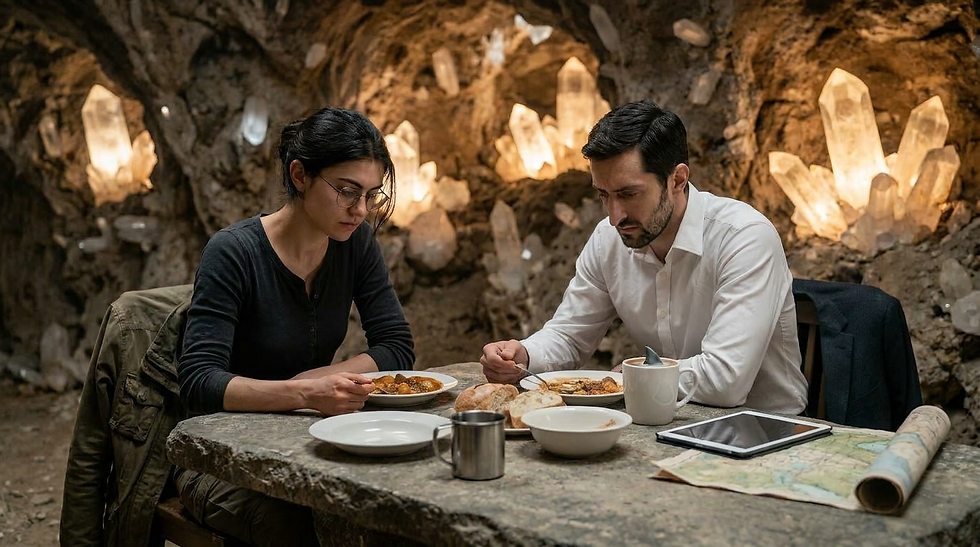
Quantum Coffee, Tuesday Night
Evadine set two mugs on the table. Steam rose. The coffee kept its temperature. It always did.
Enki sat across from her, elbows off the table because she had rules in her apartment. He watched the mugs a second too long.
“You made it perfect again,” he said.
“You mean it made itself perfect,” Evadine said. “Stop trying to flirt your way into taking credit for my work.”
Enki took a sip. “I did not flirt.”
“You blinked slower. That counted.”
He swallowed. “I blinked at a normal speed.”
Evadine pointed at him. “There. You did it again. Start talking.”
Enki leaned back in his chair. “You asked for Gilgamesh.”
“I asked for you to tell it,” she said. “In your words. No sacred chanting voice. No performance.”
“You wanted banter,” Enki said.
“I wanted you to admit you enjoyed the drama.”
Enki set the mug down. “Fine. I enjoyed parts of it. Humanity wrote a hero story and hid a grief story inside it.”
Evadine rested her chin on her hand. “Go.”
Enki nodded once. “It happened after the cities rose again. After the water stopped owning the world. Uruk stood tall. Walls, gates, guards, priests. Markets kept moving even when the rulers changed. Gilgamesh ruled there.”
“Gilgamesh,” Evadine repeated. “Two thirds divine, one third human. That old line.”
Enki glanced at her. “People loved fractions. It made power feel measurable.”
“Was he actually two thirds anything?” she asked.
“He carried Anunnaki blood far back,” Enki said. “Enough to matter. Not enough to keep him from making bad choices.”
Evadine sipped her coffee. “So he was a politician.”
Enki’s mouth tightened. “He was a king. He treated Uruk as his body. If he wanted something, the city moved.”
“Let me guess,” Evadine said. “He wanted everything.”
“He wanted proof,” Enki replied. “He wanted his name to last. He pushed men into labor. He pushed young people into the palace. He pushed the old priests until they started praying for a solution instead of bargaining for one.”
Evadine tapped the mug. “And somebody answered.”
“The city begged the powers for relief,” Enki said. “The Assembly listened. Not all of them for the same reason.”
Evadine raised an eyebrow. “Enlil?”
Enki looked down at the coffee. “Enlil disliked disorder. A king who acted alone created disorder.”
“That sounded personal,” Evadine said.
“It was political,” Enki said. “And it was personal. Enlil always believed authority should come from above.”
Evadine leaned forward. “And you believed it should come from people.”
Enki did not answer that. He continued.
“They decided to give Gilgamesh a counterweight,” he said. “A rival. Someone strong enough to force him into restraint.”
Evadine’s eyes narrowed. “They made Enkidu.”
Enki nodded. “They shaped him outside the city. He grew among animals. No court training. No fear of laws. He ran the hills, broke traps, freed prey, ruined hunters.”
Evadine smirked. “He sounded useful.”
“He was,” Enki said. “Until humans did what humans did.”
Evadine spread her hands. “Here we go.”
“A trapper saw him,” Enki said. “The trapper ran home shaking, then went to Gilgamesh. Gilgamesh did not send soldiers. He sent a woman trained to turn a man’s body against his own habits.”
Evadine sat back. “He weaponized sex.”
“He used what he had,” Enki said.
“And the priests called it civilization,” Evadine said.
Enki’s gaze held on her for a moment. “Enkidu met her. He stayed. When he went back to the animals, they avoided him. They ran. He chased them and he could not keep pace.”
Evadine’s face softened. “He lost his place.”
“He gained another,” Enki said. “He learned bread. Beer. Clothes. Words. He learned that people could trap him using comfort.”
Evadine pointed at the mugs. “So, this.”
Enki looked at the coffee. “Your coffee did not trap. It offered.”
“It offered a trap,” she said. “Keep going.”
Enki continued. “Enkidu heard about Gilgamesh. He heard what the king did in his palace. He marched to Uruk. He stood in the street near the wedding house. Gilgamesh came out.”
Evadine’s mouth twitched. “Let me guess. They fought.”
“They fought,” Enki said. “They broke a doorframe. They cracked walls. People watched from rooftops. Gilgamesh pushed. Enkidu held. Gilgamesh finally gained the advantage, then stopped.”
Evadine blinked. “He stopped?”
“He felt it,” Enki said. “Someone who could resist him. Someone who did not kneel. The fight ended. They stared at each other. Gilgamesh smiled first.”
Evadine made a face. “He smiled because he found a new toy.”
“He smiled because he felt less alone,” Enki corrected.
Evadine tilted her head. “That mattered to him?”
“It mattered more than he admitted,” Enki said. “That friendship changed him. It did not make him good. It made him human.”
Evadine snorted. “He already was human.”
Enki pointed a finger at her. “He acted above it. Friendship dragged him down into consequence.”
Evadine nodded once. “All right. Then what?”
“Then boredom happened,” Enki said. “Kings got bored. Strong men got bored. They wanted a task that made their blood move.”
Evadine sighed. “Of course.”
“Gilgamesh proposed a raid,” Enki said. “Not on a city. On the cedar forest. He wanted to cut trees and take the wood. He also wanted to kill Humbaba, the guardian set there.”
Evadine narrowed her eyes. “Set there by whom?”
Enki did not answer right away. He lifted the mug again, then set it down untouched.
“Some guardians were old agreements,” he said. “Some were punishments. Some were duties nobody wanted. Humbaba had been bound to that place for a long time.”
Evadine watched him. “And Gilgamesh decided he deserved the cedars anyway.”
“He decided Uruk deserved glory,” Enki said.
Evadine held his gaze. “And you decided what?”
Enki exhaled. “I watched. I did not stop him. I did not send a storm to block the road. I did not break their weapons. I did not do enough.”
Evadine’s voice stayed calm. “You helped them?”
“I gave advice through dreams,” Enki admitted. “Not to kill Humbaba. To survive what they started.”
Evadine drummed her fingers on the table. “You always did that. You hated the plan, then you made sure people lived through it.”
Enki’s eyes flicked up. “I valued life.”
“You valued choice,” Evadine corrected. “Even when the choice was stupid.”
Enki did not argue.
He continued. “Gilgamesh and Enkidu traveled. They crossed rivers. They fought bandits. They slept on open ground. Gilgamesh had nightmares. Enkidu woke him, laughed at the fear, then lied to him, told him the dreams meant victory.”
Evadine smiled. “That was friendship.”
“That was a soldier’s mercy,” Enki said. “Enkidu learned humans needed hope even when it was not earned.”
“Keep going,” Evadine said. “They reached the forest.”
“They entered,” Enki said. “The air changed. The trees stood huge. Sap ran. The ground was muddy underfoot. Humbaba confronted them. His voice carried far. He warned them. He offered them a chance to leave.”
Evadine lifted a hand. “He offered. They refused.”
“They refused,” Enki said. “They fought. They used axes. They used courage. They used stubbornness. The wind changed. Humbaba weakened.”
Evadine stared at Enki. “You did that.”
Enki replied, “Yes.”
Evadine did not speak for a few seconds. Then she said, “So they killed him.”
“They did,” Enki said. “Humbaba begged them for mercy. Enkidu pushed Gilgamesh to finish it. Gilgamesh hesitated. Then he struck.”
Evadine’s voice went flat. “Then they cut down the trees.”
“They cut many,” Enki said. “They bound logs. They built a raft. They floated them back.”
Evadine leaned back. “So far: tyrant meets wild man, they become friends, then they commit a forest crime.”
Enki gave her a tired look.
Evadine held up both hands. “I said I wanted banter.”
Enki nodded once. “Banter earned. Then Uruk celebrated. Priests burned incense. People sang. Gilgamesh washed, dressed, stood tall.”
Evadine’s eyes sharpened. “Here came Ishtar.”
Enki’s mouth tightened again. “Inanna, yes. She saw him after victory. She wanted him.”
Evadine looked pleased. “And he said no.”
“He said no in the worst possible way,” Enki said. “He listed her past lovers. He listed their endings. He spoke in public. He made it a performance.”
Evadine winced. “He chose violence.”
“He chose pride,” Enki said. “Inanna did not accept refusal. She went to her father, demanded punishment.”
Evadine leaned forward. “Anu.”
Enki nodded. “Anu resisted. Inanna threatened to raise the dead, then Anu gave her the Bull of Heaven.”
Evadine whispered, “That didn't end well?”

“It did not,” Enki said. “The bull came down. It tore up ground. It broke men in the streets. It drank water from the river. It brought famine and fear into the city.”
Evadine frowned. “And Gilgamesh fought it.”
“Gilgamesh and Enkidu fought it,” Enki said. “They killed it. Enkidu tore off a part of it and threw it at Inanna.”
Evadine let out a short breath. “He threw it.”
“He did,” Enki said. “They crossed a line. Not the killing. The insult.”
Evadine sat still. “So the gods demanded payment.”
“The Assembly called it justice,” Enki said. “The bull had been a sanction. The killing rejected that sanction. Someone had to pay.”
Evadine’s gaze sharpened. “And they chose Enkidu.”
Enki nodded.
Evadine’s voice turned quiet. “That part always hurt.”
Enki kept his eyes on the table. “Enkidu fell sick. Not a fever that passed. Not a wound that closed. It stayed. It ate him.”
Evadine asked, “Did he know what was happening?”
“He knew,” Enki said. “He raged. He cursed the trapper. He cursed the woman who drew him to the city. Then he pulled back. He blessed them instead. He did not want his last words to be spite.”
Evadine swallowed. “Gilgamesh watched.”
“He watched, helpless,” Enki said. “He offered gifts. He offered prayers. He offered power. None of it mattered.”
Evadine’s fingers tightened around her mug. “Enkidu died.”
Enki nodded.
Silence settled for a moment. The refrigerator hummed. A car passed outside.
Evadine finally said, “Now he got scared.”
“He got stripped,” Enki corrected. “He had believed strength solved everything. Enkidu’s body did not care. Death did not care.”
Evadine stared at him. “He saw the limit.”
“He did,” Enki said. “He held Enkidu’s body. He refused burial for days. People begged him to let the rites happen. He did not move until the body changed.”
Evadine looked away. “That was ugly.”
“It was human,” Enki said. “Then he covered Enkidu in cloth and gold, arranged the funeral, then left.”
Evadine asked, “Left Uruk?”
“He ran from the city,” Enki said. “He ran from his own bed. He ran from his own name. He went into the wild wearing skins.”
Evadine pointed at him. “So he tried to become Enkidu.”
Enki nodded. “He did not manage it. He carried grief. Grief made noise inside him. He kept asking one question.”
Evadine answered for him. “How do I avoid death.”
Enki lifted his eyes. “Yes.”
Evadine took a slow sip. “And somebody told him about Utnapishtim.”
Enki nodded again. “He heard of a man granted endless life, a man who survived the Great Deluge.”
Evadine’s mouth quirked. “Your old flood story.”
Enki gave her a warning look.
Evadine held up a finger. “No fear now. I can tease.”
Enki exhaled. “Tease later.”
Gilgamesh traveled far, Enki continued. He crossed mountains. He met scorpion guardians at a tunnel entrance. They saw what he carried in his blood. They questioned him. They let him pass.
Evadine leaned in. “Did they really talk?”
“They spoke,” Enki said. “Not every record captured it well.”
“Gilgamesh walked through darkness for a long stretch,” Enki said. ”He came out near a garden of precious stones. He met a tavern keeper, Siduri. She told him to stop chasing endless life. She told him to eat, drink, wash, love, hold a child’s hand. Gilgamesh rejected that answer.”
Evadine nodded. “People hated that answer.”
“They still do,” Enki said. “Siduri directed him to Urshanabi, the boatman. The boatman took him across dangerous waters.”
Evadine tapped the table. “And Gilgamesh messed that up too.”
“He broke sacred things on the shore,” Enki said. “He acted first. Urshanabi shouted at him. Then he still helped, told him to cut poles, to push the boat across.”
Evadine smirked. “So even the boatman had your problem. Hated the plan, still helped.”
Enki’s eyes narrowed. “I do not appreciate being diagnosed.”
Evadine smiled. “I appreciated doing it.”
”They reached Utnapishtim,” Enki said. ”Gilgamesh stared at him, expecting a giant, expecting a shining being. He saw a man.”
Evadine said, “He looked ordinary?”
“He did,” Enki said. “That made Gilgamesh angry. He wanted the secret to look important.”
Evadine crossed her arms. “So he demanded the secret.”
“He demanded,” Enki said. “Utnapishtim asked him why. Gilgamesh spoke of Enkidu’s death. His voice broke. He admitted fear.”
Evadine’s expression softened again. “So he finally told the truth.”
“He did,” Enki said. “Utnapishtim answered him by telling the flood story.”
Evadine arched an eyebrow. “From your angle.”
Enki stared at her.
Evadine corrected herself. “From the human angle.”
Enki’s face eased a fraction. “Utnapishtim said the gods decided to wipe people out. He said one god warned him.”
Evadine said, “You.”
Enki did not deny it. “I spoke through a wall. I gave measurements. I gave instructions. Build a boat. Seal it. Bring animals. Bring family. Bring craft workers. Bring seed.”
Evadine watched him. “You saved a sample.”
“I saved samples of all their DNA,” Enki said.
“And Enlil got angry,” Evadine said.
Enki’s eyes stayed steady. “Enlil disliked being defied. The flood came. It ended. The boat grounded. Utnapishtim offered sacrifice. The gods smelled it.”
Evadine shook her head. “Always food.”
“Always hunger,” Enki replied. “Enlil arrived, saw survivors, demanded to know who undermined the decree. I admitted it.”
Evadine asked, “Did he punish you?”
“He argued,” Enki said. “He did not have a clean path to punish me then. He did what he could. He pressured Utnapishtim’s fate instead.”
Evadine frowned. “So Utnapishtim got endless life.”
“Exile plus endless life,” Enki said. “A distant shore. No city. No noise. No normal aging. Endless time to remember the storm.”
Evadine stared at her coffee. “That was not a gift. That was endless PTSD.”
“It was complicated,” Enki said.
Evadine looked back up. “So Gilgamesh asked for the same.”
“Gilgamesh demanded it,” Enki said. “Utnapishtim tested him. Stay awake six days, seven nights.”
Evadine snorted. “Easy.”
Enki tilted his head. “For you?”
Evadine paused. “No.”
”Gilgamesh sat down,” Enki said. ”He promised he would not sleep. His body failed quickly. Utnapishtim’s wife baked bread each day, set a loaf near him to mark time. When Gilgamesh woke, he denied sleep. The bread told the truth.”
Evadine said, “So he lost.”
“He lost,” Enki said. “He begged anyway. He did not want to return empty.”
Evadine leaned forward. “Then the wife took pity.”
Enki nodded. “She pushed Utnapishtim. He gave Gilgamesh a consolation. A plant at the bottom of the waters. It restored youth.”
Evadine lifted her brows. “So he still got a chance.”
“He tied stones to his feet,” Enki said. “He dove. He reached the plant. He cut it free. His hands shook when he surfaced.”
Evadine smiled. “He planned to bring it back to Uruk.”
“He did,” Enki said. “He said he would share it. He said elders would taste it first. He said he would taste it last.”
Evadine narrowed her eyes. “He meant it?”
Enki paused. “For that moment, he meant it.”
Evadine let that sit. “And then the snake.”
Enki nodded. “They stopped to rest. Gilgamesh bathed. He set the plant down. A snake smelled it, took it, slid away. Gilgamesh came back, saw it gone, sat down, and cried.”
Evadine exhaled. “So he returned to Uruk empty again.”
“He returned changed,” Enki said. “He stood outside the walls, showed them to Urshanabi, spoke of the bricks, the foundations, the labor that built them.”
Evadine frowned. “He bragged again?”
“He claimed work, not conquest,” Enki said. “He saw the city as proof that humans could build something that outlasted a body.”
Evadine stared at Enki. “So the answer was never immortality.”
“The answer was legacy,” Enki said. “Not the name alone. The impact. The record. The story carried forward.”
Evadine’s eyes sharpened. “So, scribes. Builders. People who refused to let memory die.”
Enki held her gaze. “Yes.”
Evadine nodded slowly. “That part mattered to you.”
“It did,” Enki said. “Humans forgot their power, but they kept one skill. They remembered each other through words.”
Evadine tapped the table. “You just made it about your favorite thing.”
Enki raised an eyebrow. “Knowledge?”
“Control,” Evadine said.
Enki let out a short laugh. “You accuse me of control after that entire story?”
Evadine leaned back, satisfied. “You gave a king a lesson he did not want, and you did it by letting him suffer.”
Enki’s face tightened. “I did not design his suffering.”
“You did not stop it,” Evadine said.
Enki sat still. Then he said, “I did not stop enough. I never stopped enough. That was the cost of letting humans choose. That was also the point.”
Evadine’s voice softened. “And now?”
“Now the flood threat ended,” Enki said. “The old lever no longer sat above human heads. You all have room to grow. Room to fight for the right reasons.”
Evadine lifted her mug. “So tell me the real ending.”
Enki tilted his head. “The real ending?”
Evadine pointed at him. “What did Gilgamesh do after he came home. Not the tablet version. Your version.”
Enki took a breath. “He ruled again. He reduced some abuses. Not all. He listened more. He walked the streets in daylight. He argued less in the temple, more in the council. He still wanted his name to last. He just stopped taking it from people.”
Evadine nodded. “He learned, late.”
“Late still counted,” Enki said.
Evadine smiled. “All right. That was good.”
Enki looked suspicious. “That sounded final.”
“It was,” Evadine said. “Next week you'll tell me the one about the man who complained his god never answered him.”
Enki blinked. “You mean the sufferer text.”
Evadine grinned. “Yes. I planned ahead.”
Enki reached for his mug. “Then I demand a refill.”
Evadine stood. “You demanded. You never asked.”
Enki watched her cross the kitchen. “I asked earlier.”
“You blinked slowly earlier,” she said over her shoulder. “That did not count.”
Enki sat back, listening to the quiet apartment, to the steady hum of appliances, to a world that kept moving. He waited for the coffee.
He also waited for the next story.


Comments