

Sansuna
Updated: Mar 22

Summary
Sansuna is a half‑Anunnaki, half‑human giantess from the pre‑Deluge era who adopts a human child, Splotch, shields him through the Great Deluge, and sets the founding directive for the Line of Splotch.
Overview
Sansuna belongs to a rare group of giant beings on Earth whose ancestry includes Anunnaki blood and human ancestry. The codex identifies her origin in Malta folklore where local tradition speaks of a giant woman who builds stone structures and cares for humans. In this series she stands apart from other giants who treat humans as prey or labour. She displays consistent protection toward vulnerable humans and exercises her strength and endurance to preserve, not to dominate.
Her primary narrative function is to ensure survival of Splotch during the Great Deluge and to imprint a durable instruction into his line: “Live. Make your mark, Splotch. Do not forget.” That injunction becomes the core of the generational tendency carried by the Line of Splotch, later manifesting in humans who bridge divides and resist systems that erase lives.
Details
Nature and abilities
Hybrid status
One parent from the Anunnaki line, the other human.
Stature far above human norm; Enki describes her as giant beside mastodons and humans.
Musculature and bone density support high output during sustained exertion such as running under blast conditions.
Physical and practical skills
Expert mastodon hunter using stone‑tipped spears and tracking knowledge.
High environmental awareness; detects changes in animal behaviour and sky phenomena early.
Capable of rapid load carriage; carries Splotch and his gear over long distances during disaster onset.
Cognitive traits
Strong loyalty once she adopts responsibility for a human.
Capacity to plan under pressure, including route selection to the gorge and timing of her escape from the flood surge.
Able to transmit cultural knowledge through stories, prayers, and direct instruction.
Relationships
Humans in general
Stands in contrast to other giants who hunt humans.
Measures human worth by courage and willingness to learn rather than by origin.
Splotch
Adopts him when he is very young.
Teaches him hunting reduced to scales suitable for human size.
Gives him the survival prayer he uses under stress.
Protects him during the impact and flood and instills the line directive that shapes his descendants.
Role in wider setting
Concrete example of half‑Anunnaki heritage manifesting outside formal Assemblies and cities.
Bridges Maltese megalithic folklore and the Anunnaki world structure in the series.
Provides the starting point for a human family line that repeatedly resists division and erasure across ages.
History
Pre‑Deluge life
Before the comet impact and Deluge:
Sansuna lives in a region where mastodon herds move through forest and open ground.
She hunts megafauna using spear, body strength, and tactical knowledge of terrain.
Other giants in that era often treat humans as meat or incidental resources.
Sansuna deviates from that pattern; she notices a small human child, later named Splotch, and chooses to raise him instead of consuming or ignoring him.
She integrates him into her daily routine:
Crafts a fur‑lined pouch sized to hold Splotch securely during travel and hunts.
Shows him how to track, how to move in cover, and how to say the prayer for a good death.
Demonstrates respect for prey and for environmental signs, which he copies.
The Great Deluge
Enki’s memory sequence in “Immortal Sin” records the approach of the comet and the steps Sansuna takes when she recognises the threat:
A streak brightens across the sky; mastodons react, birds break formation.
Sansuna reads the signs and concludes that no ordinary shelter will suffice.
She lifts Splotch, kisses his head, places him in the pouch, then runs away from the projected impact direction.
She chooses a gorge for shelter:
Descends into a narrow slit between stone pillars that can resist blast force.
Positions her body as shield over the pouch.
Endures heat, shock wave, and debris while maintaining full coverage.
As the Deluge follows impact:
Floodwaters enter the gorge.
Sansuna traps air in the pouch and then closes her own mouth over its opening to keep water out.
She holds her breath as long as she can while gauging turbulence, then pushes free and swims upward when she judges that the peak violence has passed.
On reaching the surface she finds flotation among debris and ensures Splotch breathes again.
Her actions ensure survival of at least one human from her region who carries the instruction she gives him.
Before impact she tells Splotch, “Live. Make your mark, Splotch. Do not forget.” Those words become the internal law of the Line of Splotch.
Post‑Deluge implications
The direct narrative does not yet detail Sansuna’s fate after the flood. The impact on history is primarily through Splotch and his descendants:
His line carries a tendency to record, to resist erasure, and to stand against structures that reduce persons to expendable units.
Roles include scribes, mediators, rescuers, and other bridge‑builders across ages.
The Maltese tradition of a giantess Sansuna who builds monumental structures for humans points to a possible later phase where she or her memory influences megalith construction in that region.
In this setting, those stories appear as human recollection of Sansuna’s presence and actions before and possibly after the Deluge.
Notes
Sansuna stands as one of the earliest documented cases of a half‑Anunnaki being who sides definitively having humans against divine or giant norms.
Her choice to invest effort and risk in a single human child contradicts common Anunnaki calculations that focus on populations and resources.
The Line of Splotch, anchored in her last spoken instruction before impact, becomes a structural element in later books, connecting ancient trauma to modern resistance against systemic manipulation.
Maltese legends about a giant woman who builds temples and carries stones in her apron give cultural context for Sansuna’s presence on Earth and support the codex identification.
Citations
Codex entry Sansuna (in‑setting character profile).
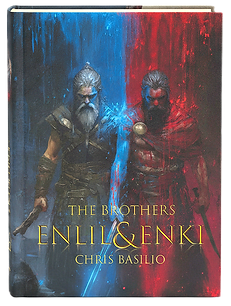
The Brothers: Enlil & Enki, Act 1, chapter “Immortal Sin” (Enki’s vision of Sansuna’s hunt, the comet impact, her sheltering of Splotch, and survival through the flood).
The Brothers: Enlil & Enki, early Ascended chapters that reference “Sansuna, benevolent to humans unlike other giants” and the family story passed to Evadine through her grandmother.
Azzopardi, A., “Giants and Megaliths in Maltese Folklore,” Journal of Mediterranean Studies (for the human legend of a giantess Sansuna and megalithic building traditions).


Comments