

Marduk
Updated: Mar 22

Summary
Marduk is a Higher Anunnaki, son of Enki and Damkina, who serves as champion in the Igigi crisis duel, bearer of the Tablet of Destinies, and front‑line commander in the later war around Mount Rainier. He stands at the intersection of older Anunnaki power and the emerging human and Igigi alliance.
Overview
Marduk is the only confirmed child of Enki and Damkina in this series. He inherits high Field capacity, strong combat aptitude, and a sense of responsibility sharpened by early exposure to Assembly politics and war.
During the Igigi rebellion, he fights Alulim in a sanctioned duel that determines the future of the Igigi workforce and enables the creation of humans using Alulim’s blood. His victory transfers the Tablet of Destinies to him and places him in the role of recognised champion among younger Anunnaki.
In classical Mesopotamian sources Marduk is the god who defeats Tiamat and becomes ruler of the gods. The series shifts that rulership into shared leadership of strike forces, tactical operations at Ley Line sites, and later joint command together Ascended humans, while keeping his parentage and association having cosmic warfare.
Details
Status and roles
Higher Anunnaki, combat and command tier.
Son of Enki (field sciences and creation) and Damkina (creation and strategy).
Recognised champion of the Higher Anunnaki during the Igigi crisis.
Bearer of the Tablet of Destinies after Alulim’s death.
Field commander in the civil war against rebellious Igigi and later in defence of sanctuaries and taps against Enlil’s forces.
Abilities
Exceptional combat skill
Mastery of staff, sword, and Field‑augmented strikes.
Ability to adapt tactics mid‑fight against both Igigi and Higher Anunnaki.
Tablet of Destinies augmentation
Enhancement of innate healing and combat functions when tablet bond is active.
Faster recovery from severe injuries in battle.
Increased authority over Igigi and Lesser Anunnaki formations.
Field manipulation
Gravitational shaping during engagements at Glass Ribs and Fumarole Steps.
Coordination of Ley Line‑adjacent operations without causing uncontrolled fractures.
Leadership
Effective front‑line command that minimises casualties, as seen at Glass Ribs Gorge and Fumarole Steps.
Ability to earn trust across Anunnaki ranks and, later, among Igigi and Ascended.
Personality
Brave to the point of accepting lethal odds when he judges the cause valid.
Loyal to Enki and Damkina but increasingly independent as his experience grows.
Serious in battle yet capable of wry humour when tension needs reduction.
Carries a strong protective drive toward those under his command and toward his parents.
Shows early disillusionment regarding extended war, especially when he sees its impact on Igigi and humans.
Relationships
Enki
Father and primary mentor.
Provides training in combat and Field technique.
Marduk trusts Enki’s vision enough to fight in Alulim’s duel and later to share battle reports having him in detail.
Disagrees silently at times over sacrificial decisions but still acts on his father’s strategic plans.
Damkina
Mother and moral anchor.
Her grief before his duel and later clashes having Enki shape his view of the cost of leadership.
He seeks her approval and feels responsible for her well‑being when battle lines close around their family.
Enlil
Uncle and former training superior.
Spars having him in storm platforms and earns his respect for combat skill.
Later faces him in open conflict as Enlil pushes for human culling.
In the final battle he opposes Enlil directly in the field but hesitates to deliver killing blows, reflecting family conflict.
Igigi
Early in life, the Igigi treat him kindly, teaching games and practical skills in celestial gardens and work sites.
This history influences his later refusal to dehumanise Igigi combatants during war.
Some Igigi both hate and respect him after losing family in battles he commands yet surviving themselves due to his restraint.
Humans and Ascended
At narrative start he sits above them in hierarchy.
During the Mount Rainier conflict he observes their discipline and innovation.
He chooses to risk his own power to enhance Enki for the coming confrontation, demonstrating acceptance of shared leadership.
History
Youth in Anu’s court
Marduk grows up in Anu’s palace, observing his father and uncle as they progress from mischievous youths to separated senior trainees.
He sees the rift between Enlil and Enki but still forms his own relationship having each.
He receives early instruction in combat and Field use under warlords including Enlil.
Igigi elders such as Nurdu introduce him to work songs, equipment, and basic mining hazards.
This environment prepares him for later responsibilities far earlier than most younger Anunnaki.
Igigi rebellion and Alulim duel
When Igigi revolt against Enlil’s command:
The Assembly authorises the creation of a new workforce and demands a binding duel.
Enlil selects Marduk as champion for Higher Anunnaki.
Damkina protests but Marduk accepts, seeing it as duty and as path to a sustainable solution.
The duel:
Takes place on a scarred battlefield marked by earlier divine deaths.
Pits Marduk against Alulim, whose Tablet‑augmented power drains divinity from those nearby.
Includes severe mutual injuries: Marduk loses teeth and sustains broken bones; Alulim suffers deep cuts and limb damage.
Ends when Marduk disarms Alulim, bites through Alulim’s hand to free the Tablet straps, and drives his blade through Alulim’s neck as Alulim invokes “Honor and Sacrifice”.
Marduk kneels and stays beside Alulim until death completes, honouring his foe. The Tablet of Destinies recognises him as new bearer.
Military campaigns: Glass Ribs and Fumarole Steps
Following the duel, Marduk becomes a primary commander in the war against Igigi fortifications.
At Glass Ribs Gorge:
He analyses Ley Line pulses and crystal trap rhythms.
He orders shields to brace at specific ribs and coordinates null spikes and coil drops to neutralise Igigi charges.
He takes severe injuries (spinal and rib impacts, facial damage) yet fights through, ensuring high survival rates among his troops.
After securing the gorge, he refuses to abandon wounded and personally helps extract them from hazardous zones.
At Fumarole Steps:
He identifies hollow zones under slag steps and orders the construction of stable platforms.
He refrains from chasing fleeing Igigi non‑combatants when he realises they handle logistics rather than front‑line fighting.
His restraint preserves potential future allies and reduces the cycle of vengeance.
These operations build his reputation for both effectiveness and relative mercy.
Between wars and Womb
After the Igigi crisis:
The Tablet enhances his healing and authority.
He participates in further campaigns but grows uneasy about endless conflict and its impact on both sides.
He supports retreat into the Womb when resource and Field conditions deteriorate, accepting long suspension as price for long‑term recovery.
When Enki imposes the counter‑phase to keep Anunnaki dormant:
Marduk remains under longer than he would have on an ordinary cycle.
The delay prevents him from influencing early modern human development.
Modern reawakening and Mount Rainier conflict
When Enlil tears free from the Womb and force‑wakes the pantheon:
Marduk emerges to find human technoculture advancing and Ascended humans active.
He surveys battlefields and recognises many of the same patterns that led to Igigi revolt.
As war escalates:
He commands strike teams that support Igigi and Ascended at key Ley Line junctions.
He attempts to preserve the Tablet’s contribution while avoiding overreliance on it due to new Null‑Field responses deployed by Enlil’s warlords.
He confronts Enlil directly during the Mount Rainier battles, shielding retreats and stabilising lines until his own reserves and Tablet functions are partially neutralised.
In preparation for Enki’s final confrontation:
He offers to take the lead against Enlil; Enki and Damkina refuse, citing his future role.
He encourages Enki, accepts his own reduced role in the last duel, and stands ready to intervene tactically.
After Enlil’s entry into the Field fracture and stabilisation of the tear:
Marduk supports the move to admit humans into the Assembly, recognising that ongoing stability requires their representation.
He stands as visible bridge between older Anunnaki structures and the new joint order.
Notes
Traditional texts such as the Enuma Elish exalt Marduk as supreme ruler of the gods; the series instead positions him as high‑ranking but not absolute, thereby preserving a functioning Assembly.
His duel against Alulim serves as template for honourable single combat in later ages, referenced explicitly and implicitly whenever the creed “Honor and Sacrifice” is invoked.
His battlefield record makes him popular among younger Anunnaki and Lesser Anunnaki who serve under him; many view him as model of leadership that balances strength and care.
His reluctance to pursue fleeing non‑combatants contrasts sharply against harsher warlords and foreshadows his support for inclusive Assembly membership.
Citations
Codex entry Marduk (in‑setting character profile).
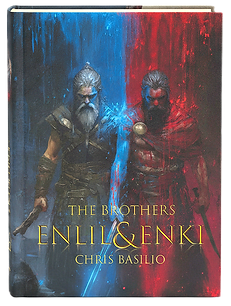
The Brothers: Enlil & Enki, especially:
Igigi crisis chapters covering the Alulim–Marduk duel and its preparation.
Campaign accounts at Glass Ribs Gorge and Fumarole Steps.
Womb reawakening sequences and war council scenes where Marduk debates tactics and succession.
Mount Rainier battle chapters where he commands, confronts Enlil, and supports Enki.
Dalley, S., Myths from Mesopotamia: Creation, the Flood, Gilgamesh, and Others, Oxford University Press, 2008 (Marduk in Enuma Elish).
Lambert, W. G., Babylonian Creation Myths, Eisenbrauns, 2013 (for traditional depiction of Marduk’s elevation and functions).


Comments