

Honor and Sacrifice
Updated: Mar 8
Summary
“Honor and Sacrifice” is the Anunnaki creed and battle cry. It defines duty to the Field, to the Assembly, and to subordinates. Over time its meaning shifts from justification for imposed loss to a standard for self‑incurred cost, culminating in Enlil’s final act and the admission of humanity into the Assembly.

Overview
“Honor and Sacrifice” is the central Anunnaki moral and operational code. It governs war, law, and stewardship of the Field. Officers use it to open and close commands. Soldiers shout it before and after engagements. Councillors employ it to conclude votes and decrees.
The creed joins two requirements:
Honor: adherence to duty, commitments to the Field, and promises to superiors and subordinates.
Sacrifice: willingness to pay real cost in resources, status, or existence when duty demands it.
In practice, the creed regulates how Anunnaki justify lethal force, industrial risk, and culling decisions. It also provides a measure for judging leaders. An Anunnaki who orders others to suffer but refuses to accept equivalent exposure no longer fulfils the creed, even if words are spoken.
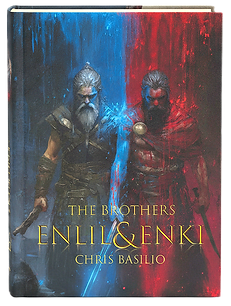
The creed remains active. During the events in The Brothers: Enlil & Enki, it governs the duel between Marduk and Alulim, the Great Deluge, Enki’s Womb counter‑phase, Enlil’s forced awakening of the pantheon, and Enlil’s final self‑sacrifice into the Field fracture.
Details
Formula and usage
Common spoken form in Assembly and military contexts:
“Honor and Sacrifice.”
Extended formulation in many records:
“The One Sacrifices for All in Honor.”
Usage patterns:
Officers end operational orders using the creed.
Troops answer in unison as acknowledgment and acceptance of risk.
Councillors and judges close rulings using the phrase to bind themselves to the stated outcome.
Igigi adopted it in modified form during funerary and protest rites.
In all cases, the creed functions as pledge rather than ornament.
Semantic components
Honor (En)
Keeping agreements once sworn before the Field.
Transparent alignment between words and action.
Impartial enforcement of law, regardless of rank.
Correct treatment of subordinates, including Igigi and human workers, under agreed conditions.
Sacrifice (Zid)
Acceptance of personal loss when a decision imposes loss on others.
Readiness to expose self to consequences of one’s commands.
Refusal to externalise cost solely onto lower tiers or created species.
In extreme form, voluntary dissolution into the Field to correct severe imbalance.
The brothers interpret these components differently. Enlil anchors Honor in order and obedience. Enki anchors it in responsibility to those harmed by Anunnaki action.
Operational function
The creed serves several concrete functions:
Command validation
A command accompanied by the creed signals that the issuer accepts responsibility for outcomes, including failures.
Subordinates may judge the sincerity of the speaker by observing later conduct under risk.
Threshold for lethal or high‑risk acts
Massive operations such as the Great Deluge, the Alulim–Marduk duel, or Ley Line overdraws receive formal invocation.
Invocation carries expectation that commanding lords will pay future cost, not only field personnel.
Internal discipline
Trainees hear stories where those who violated the creed lost face, rank, or place in the Assembly.
Senior lords call the creed to restrain impulses toward excessive retaliation or self‑indulgent displays of force.
Cross‑species signal
Igigi learn the phrase as part of their service.
Humans under Roycemont influence encounter a weakened, humanised version in the family motto and institutional codes.
Diverging interpretations
Enlil’s reading
Sacrifice can fall on lower tiers when required by mission.
Honor is satisfied if the command preserves Anunnaki civilisation and Field stability.
Large‑scale actions such as the Great Deluge meet the standard if they remove perceived threats.
Enki’s reading
Sacrifice must return, eventually, to those who chose the path, not only to those pressed into it.
Honor demands repair and atonement after harm, including restitution to humans and Igigi.
Mass cullings perform the words of the creed but fail its substance.
Igigi stance
Early on, many Igigi accepted the creed at face value.
After repeated lethal duty in Ley Lines and mines, they judged that Higher Anunnaki applied “Sacrifice” to Igigi bodies and “Honor” to their own status.
During Alulim’s death and later protests around tunnels, they used the creed to accuse the Assembly of hypocrisy.
The collision of these readings frames much of the later conflict.
History
Origins
The precise origin of the creed predates recorded human history.
Anu and early Assembly records show a shorter precursor, used during first seeding missions. Language expanded as Anunnaki took on Field stewardship across multiple worlds. By the time operations on Earth began, “Honor and Sacrifice” had already become standard in training halls and council scripts.
Pre‑Deluge and Igigi era
During early Earth exploitation:
The creed regulated duty rosters and hazard acceptance among Igigi crews who worked Ley Line shafts and Subterranean Crystalline Caverns.
It justified orders to remain in lethal zones when Field flux or crystal instability threatened collapse.
Igigi elders such as Nurdu invoked the creed during remembrance rites for the dead and during negotiations for improved conditions.
In the Alulim–Marduk combat ritual:
The Assembly declared that one death would end the civil war and ensure the creation of humans who could inherit the burdens.
Both champions saluted using the creed before combat.
Alulim’s final shout “Honor and Sacrifice” before Marduk’s killing blow encoded his consent and expectation that his blood would serve both Igigi freedom and future species.
The Tablet of Destinies passed to Marduk as direct result of this duel, further binding leadership to the creed.
The Great Deluge
During debates leading to the Great Deluge:
Enlil argued that flooding Earth and removing most humans aligned with “Honor and Sacrifice” because it preserved Field integrity and Anunnaki survival.
The Assembly used the creed as rhetorical anchor for the decision to redirect the comet.
After witnessing the destruction and surviving humans’ suffering, Enki’s understanding shifted:
He judged that the Assembly had sacrificed others while shielding itself.
His repetition of the creed thereafter carried an internal reversal: Honor demanded stopping such acts, Sacrifice now meant owning past decisions rather than repeating them.
This shift later drove his Womb counter‑phase and his refusal to allow a second cleansing.
Roycemont mandate
After the Deluge:
Enlil selected a human family, the Roycemonts, to carry a mandate to keep humanity divided and distracted from divinity.
He sealed a mark into their line and taught them a version of the creed as justification for manipulation and engineered conflict.
The family motto retained the phrase “Honor and Sacrifice”, stripped of its original Field context, refocused on earthly power and continuity of the line.
Over generations, the Roycemonts forgot the divine origin of the mandate and creed, using both to rationalise ordinary elite exploitation.
Womb and reawakening
During the retreat to the Womb of Creation:
The creed framed the choice to suspend activity and entrust future survival to the Field.
Enlil viewed entering the Womb as collective Sacrifice to realign with planetary recovery.
Enki later used the same creed internally to justify his unilateral counter‑phase, which cost him large portions of his own divinity.
When Enlil forced premature awakening of the pantheon using his own energy:
Observers saw a literal enactment of Sacrifice; he depleted his power to wake them and to convene the Assembly.
Many warlords and lesser lords reaffirmed loyalty to him based on that display, reading it as proof that he still embodied the creed more than Enki did.
Final reinterpretation
During the climactic confrontation under Mount Rainier:
Enlil and Enki closed their duel using “Honor and Sacrifice,” aware that one would likely fall.
Enki chose not to defend against a killing strike, accepting that someone in their tier had to bear cost for prior decisions.
A subsequent Field fracture opened. Enlil stepped into it voluntarily, relinquishing his leadership and dissolving his frequency into the network to stabilise the damage.
Nurdu declared that Enlil’s act met the highest standard of the creed. The Assembly of surviving Anunnaki and Ascended humans accepted humans into the Assembly immediately after.
From that moment, the creed gained a new reading:
Honor now required sharing power and Assembly voice with humans.
Sacrifice now pointed at those who hold the most power, not those born under it.
Notes
The creed appears in human cultures as partial echoes in oaths that join duty and self‑denial, but no surviving human formula matches the Anunnaki version exactly.
Some Ascended adopt the creed consciously; others reject its historical burden and construct new formulations that emphasise mutual consent.
Future Assemblies will likely debate whether the phrase remains fit or whether a joint Anunnaki–human code should replace it.
In the Roycemont family, the creed functions as a hollow slogan until Eddard’s era, where direct exposure to Enlil and Ascended reshapes his understanding of its original weight.
Citations
The Brothers: Enlil & Enki, multiple scenes:
Igigi rebellion and Alulim–Marduk duel (use of the creed in ritual combat and labor disputes).
Great Deluge command sequence on Utu’s ship (Enlil’s invocation of the creed).
Womb episodes and Enki’s counter‑phase (internal reinterpretation).
Assembly debates and final battle under Mount Rainier (duel and Enlil’s self‑sacrifice).
Codex entry Honor and Sacrifice (in‑universe doctrinal summary).
Hubert, H., and Mauss, M., Sacrifice: Its Nature and Function, University of Chicago Press, 1964 (for comparative theory of sacrifice).
Keegan, J., The Mask of Command, Penguin, 1988 (for discussion of leadership codes that demand leaders share risk).



Comments