

Damkina
Updated: Mar 22

Summary
Damkina is a Higher Anunnaki, spouse of Enki and mother of Marduk. She combines high‑level Field ability, strategic judgment, and strong family loyalty, and she supports human ascension once convinced of its necessity.
Overview
Damkina stands among the Higher Anunnaki as a senior creation and strategy figure. In Mesopotamian tradition she appears as Damgalnuna, consort of Enki/Ea and mother of Marduk; the series adopts that structure and places her inside the Assembly and war context.
She balances Enki’s expansive curiosity and Enlil’s severe order through a grounded approach that emphasises survival, family continuity, and measured risk. She shares Enki’s concern for subordinate species but demands practical plans and clear limits whenever he proposes large interventions.
During the current cycle she acts as partner in Enki’s attempt to atone for the Great Deluge, co‑parent to Marduk as he grows into leadership, and senior voice in debates over human admission to the Assembly. In the Mount Rainier campaign she shifts from observer to direct combat support and becomes one of the few Higher Anunnaki who fully accepts humans as future Assembly members.
Details
Status and roles
Higher Anunnaki, creation and strategy tier.
Spouse of Enki, co‑designer in multiple planetary projects prior to Earth.
Mother of Marduk, involved in his training, education, and political positioning.
Member of the Assembly, present during culling debates and final votes.
Senior adviser during war councils that involve Igigi and Ascended humans.
Abilities
Field control
Strong yet disciplined Quantum Field manipulation, especially for defensive and stabilising operations.
Joint operations together Enki that adjust environmental parameters in the Womb and in sanctuaries.
Tactical and strategic judgement
Rapid assessment of risk to family, allies, and Field structure.
Willingness to challenge Enki, Marduk, and other lords when plans lack contingency.
Combat capability
Capable of erecting strong shields under heavy fire, demonstrated when she blocks Enlil’s killing strikes in the Mount Rainier caverns.
Able to coordinate Anunnaki and Ascended during retreats and extractions.
Personality
Direct, emotionally present, and unwilling to conceal anger when those close to her face unnecessary harm.
Supports long‑term atonement and reform yet insists on real protection for her family and dependents.
Holds a clear view of responsibility: those who lead must share the cost they impose.
Displays strong empathy toward Ascended humans once she observes their sacrifices.
Relationships
Enki
Long‑standing partnership that combines technical work and shared governance.
She confronts him after he sends Marduk into the duel against Alulim, physically striking him and voicing grief and anger.
Later she supports his choice to train humans and restrains his tendency to overextend his own power.
Marduk
Deep protective bond; her fear around his duel and later battles is explicit.
She warns Enki against risking their son for political settlement, yet accepts Marduk’s autonomous decisions when he proves his capacity.
She offers emotional and tactical backing when he carries the Tablet of Destinies and leads strike forces.
Enlil
Sees him as brother‑in‑law and as chief source of policies that endanger both family and created species.
Her stance hardens after the Assembly vote for culling and Enlil’s attacks on Ascended; she vows retaliation if he kills Enki.
Despite this, she honours his final act of self‑sacrifice when he enters the Field fracture.
Humans and Ascended
Initial stance is cautious; she prioritises Enki and Marduk over experimental contact.
Her view changes when she witnesses Evadine’s sacrifice to restore Enlil and Juliana’s death shielding Evadine.
After those events she treats Ascended humans as junior partners rather than incidental assets.
Appearance
In the codex she appears:
Robed in starlight, an indication of high‑tier Anunnaki status and frequent work in cosmic environments.
In later war scenes, armour and Field gear replace ceremonial dress, but her presence remains distinct among other Anunnaki.
History
Pre‑Earth and traditional role
Traditional Mesopotamian sources present Damkina (Damgalnuna) as consort of Enki/Ea and mother of Marduk, associated mainly having domestic and intercessory functions. The series extends that role into earlier cosmic operations:
She participates together Enki in large‑scale creation projects before Earth, including star and nebula formation and planetary tuning.
These shared tasks form the basis for their later cooperation on Earth and in the Womb.
Igigi era and human design
During the conflict between Higher Anunnaki and Igigi:
Damkina stands in the background of Assembly debates while Enki and Enlil argue over suitable responses.
She observes the toll on lower‑tier workers and families, which informs her later scepticism about quick “solutions” that cost many lives.
When the Assembly orders the Alulim–Marduk duel to settle the Igigi question and permit human creation:
She prepares Marduk for combat yet opposes the plan privately.
After Marduk survives, she confronts Enki, striking his chest and accusing him of risking their son for policy gains.
Her grief floods out after the duel and shapes Enki’s own view of sacrifice.
Deluge, Womb, and counter‑phase
During the Great Deluge:
She bears secondary exposure to the Field and environmental upheaval through Enki and other lords.
The event hardens her view that large cullings rarely deliver the outcomes claimed in Assembly chambers.
Inside the Womb of Creation:
She remains in suspension longer than Enki.
Enki’s unilateral counter‑phase delays her emergence and that of Marduk; when she eventually wakes, she senses the imposed dampening and recognises both its benefit and its cost to Enki.
She supports his decision to act but does not hesitate to confront him over the physical toll he accepts.
Modern era and human contact
After Enki’s emergence into the modern world and his contact having Evadine:
Damkina wakes and monitors early interactions through Field echoes and direct observation once she reaches full awareness.
She evaluates Ascended behaviour from the standpoint of risk to Enki and Marduk and to Field stability.
As Ascended numbers increase:
She joins war councils where Enki, Marduk, Igigi elders, and human leaders such as Evadine and Eddard plan operations.
She helps translate high‑tier Anunnaki concepts into constraints that humans can apply in training and combat.
Assembly, culling vote, and war
During Enlil’s forced Assembly:
Damkina stands beside Enki when he presents human origins and latent divinity.
She hears the majority vote for culling and registers both the political weight behind Enlil and the moral deficit in that decision.
When war breaks out:
She shifts from council role to active defence.
In tunnel battles she appears where shields begin to fail, reinforcing them as Ascended and Igigi withdraw wounded.
At Mount Rainier she joins Enki when he confronts Enlil and later anchors the water barrier that deflects one of Enlil’s strongest strikes.
After Enlil’s entry into the Field fracture:
She stands among those who recognise the legitimacy of his act and the new balance it creates.
She supports the decision to admit humans into the Assembly, shifting from earlier caution to open endorsement.
Notes
Damkina’s arc demonstrates a transition from family‑centred caution to broader stewardship that includes humans, Igigi, and even former adversaries.
Her visible grief and anger in domestic scenes ground Enki’s large decisions and prevent him from drifting into purely abstract views of cost.
Vows she makes regarding vengeance against Enlil if he kills Enki underline a standard that leaders must anticipate when they target peers’ families.
Her combined technical skill and emotional clarity give her high standing among both conservative and reformist Anunnaki factions once the war ends.
Citations
Codex entry Damkina (in‑setting character profile).
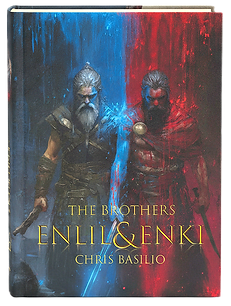
The Brothers: Enlil & Enki, especially scenes involving:
Marduk’s duel against Alulim (Damkina’s reaction and confrontation having Enki).
Womb awakening and counter‑phase aftermath.
War councils under “Collision Course” and “Love & War” (Damkina as strategist and protector).
Final battle under Mount Rainier (joint defence together Enki and recognition of Enlil’s sacrifice).
Dalley, S., Myths from Mesopotamia: Creation, the Flood, Gilgamesh, and Others, Oxford University Press, 2008 (Damgalnuna/Damkina in traditional texts).
Lambert, W. G., Babylonian Creation Myths, Eisenbrauns, 2013 (for context around the Marduk family triad: Anu–Enki–Marduk and Damkina’s place).



Comments