

Enki
Updated: Mar 22

Summary
Enki is a Higher Anunnaki and master of the Quantum Field, water, and creation sciences. On Earth he serves as designer of humans and later as mentor to Ascended humans such as Evadine Knightly. His story in this series centres on atonement for the Great Deluge, conflict against his brother Enlil, and preparation of humanity to enter the Assembly.
Overview
Enki is one of the highest‑ranked Anunnaki active in the narrative. He holds authority over water systems, biological design, and Field manipulation. Anu entrusts him early on as chief scientist for the Earth mission, while Enlil receives command roles over war and administration.
Personality traits include curiosity, patience, and willingness to question Assembly decisions. He often places care for Igigi and humans above strict obedience. That pattern sets him at odds against many senior Anunnaki, including Enlil.
Physically he presents in two main modes. In classical Anunnaki form he stands far taller than humans, blue blood, pronounced presence in the Field, and ceremonial regalia. In the modern era he adopts a compact human‑sized body, grey hoodie, dark jeans, black sneakers, long graying hair, and a bearded face that could pass as an older academic or technology founder. This compact form reduces intimidation and eases contact among humans.
Enki’s core role in the present cycle is to delay another extinction event, wake selected humans into their divinity, and argue for humanity’s admission into the Assembly of the Anunnaki.
Details
Abilities
High‑precision Quantum Field manipulation
Local and planetary scales.
Teleportation through coordinate replacement.
Probability modulation.
Telepathy and shared vision.
Creation and design
Genetic engineering for Igigi adjustments and human templates.
Custom artefacts such as the first Quantum Coffee field patterns.
Water and environmental control
Regulation of subsurface water.
Control over floods and containment.
Use of water as shield and energy sink in combat.
Knowledge and instruction
Deep understanding of Ley Lines, caverns, and Field structure.
Capability to translate that knowledge into training methods for Ascended humans.
Personality and ethics
Favors investigation before judgment.
Values individual lives, including those from created species.
Holds long‑term commitments, even when Assembly or family oppose them.
Re‑interprets the creed “Honor and Sacrifice” toward self‑accountability and repair rather than toward repeated culling.
Carries enduring guilt over past mass harm and allows that guilt to shape present restraint.
Relationships
Anu
Recognises Anu’s authority but disputes some outcomes.
Attempts to solve problems without forcing Anu to intervene directly.
Enlil
Brother and principal counterpart.
Childhood bond formed through shared pranks, punishments, and training.
Adult relationship marked by divergent views on order, risk, and treatment of subordinate species.
Enki opposes Enlil on the Great Deluge decision and on later culling plans yet remains unwilling to hate him; this tension culminates in their final duel.
Damkina
Spouse and intellectual partner.
They share design work, parenting decisions regarding Marduk, and strategic weighing of risk.
Scenes in the Womb and in later sanctuaries show mutual support and occasional direct challenge when either leans toward extreme action.
Marduk
Son and heir to parts of Enki’s power.
Enki trains Marduk in both Field usage and strategic thinking.
He entrusts Marduk to represent younger Anunnaki interests and to carry the Tablet of Destinies.
Their bond carries pride and fear, especially around the duel against Alulim and Marduk’s later willingness to face Enlil.
Igigi
Respected as co‑workers rather than tools.
Enki listens to Nurdu and other Igigi elders on mining hazards and Ley Line conditions.
He advocates for replacements and improvements when losses mount, although many proposals meet Assembly resistance.
Humans and Ascended
Initially the designer of human templates under Assembly constraints.
Conceals “God Eternal Within the Body” (Y‑H‑W‑H) in human DNA, giving humans latent divinity.
In the modern era he mentors Evadine Knightly, Julia Chen, Marcus Hargrove, and others in Field control.
He treats Ascended as future peers rather than permanent subordinates.
Weaknesses and costs
The Womb counter‑phase drains large portions of his divinity.
Subsequent large‑scale interventions carry higher personal risk and generate severe fatigue and physical degradation.
His reluctance to kill Enlil or humans even when tactically sound delays decisive resolutions.
Guilt over the Deluge sometimes clouds immediate judgment, especially when mass casualties loom.
History
Early life and training
Enki grows up under Anu in palatial Anunnaki environments.
He and Enlil steal training tablets and reprogram fountains, resulting in archive floodings and disciplinary cleaning duties that they turn into games.
Anu ends their shared youth by assigning Enlil to command training and Enki to creation and sciences. Separate trainers and quarters sever daily contact.
Enki excels under creation lords, developing skills in genetics, Field mathematics, and environmental engineering.
This period establishes Enki as the primary scientific authority among Earth‑bound Anunnaki.
Earth mission and Igigi era
When Anu assigns Enlil to lead the Earth resource mission:
Enki receives command over scientific and technical aspects.
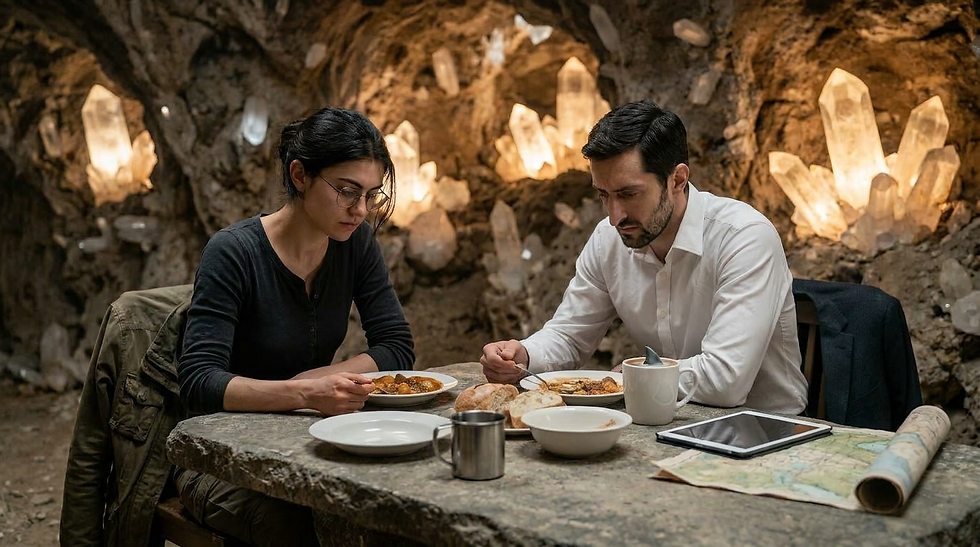
He surveys Earth’s Ley Lines, Subterranean Crystalline Caverns, and biosphere.
Igigi work crews extract energy and materials through dangerous Field couplings.
Enki and Igigi leaders such as Nurdu attempt incremental safety improvements, but pressure for yield often cancels proposed changes.
As losses mount, Igigi grievance grows, culminating in open revolt against Enlil’s command centre.
Creation of humans
In response to the Igigi rebellion:
Enki proposes adaptation of a promising terrestrial bipedal species through incorporation of Anunnaki and Igigi blood.
The Assembly debates risk versus need. Enlil argues that any strong new species will rebel.
The outcome authorises a duel between Marduk and Alulim. Alulim’s voluntary death and blood provide the core template for human design.
During the design process:
Enki tries multiple configurations, many of which fail catastrophically or prove unsuitable.
He accidentally creates a fully divine human (Lulu) who demonstrates independent Field mastery.
Enlil kills Lulu and orders strict limitations: reduced stature, shortened lifespan, high fertility, and suppression of overt divinity.
Enki complies outwardly but hides the Y‑H‑W‑H code in human DNA, a latent key to divinity that cannot be removed without collapsing the entire template.
The Great Deluge
As human populations expand and Nephilim appear:
Enlil wins Assembly approval to steer a comet into Earth for a global cleansing.
Utu’s ship executes the plan through Field‑harmonic targeting.
Enki, unable to override, watches in Field memory as impacts vaporise regions, megatsunamis sweep continents, and most humans and animals die.
He preserves a complete pre‑impact genomic record in a fused silica crystal and stores it aboard the command vessel.
The event fundamentally changes him:
He binds himself to Field memory loops that replay the comet approach and surface destruction.
The phrase “Honor and Sacrifice” becomes a constant reminder of how leaders can misuse it.
He resolves never to allow another extinction event under that justification.
Womb of Creation and counter‑phase
After extended exploitation and the Deluge:
Anu and the Assembly decide to suspend all major operations and enter the Womb of Creation.
Enki wakes early, surveys modern Earth, and identifies signs of human scientific progress toward the Quantum Field.
He observes Evadine Knightly researching Anunnaki myth and using AI, then touches her dreams.
Fearing premature Anunnaki awakening will trigger another culling:
He imposes a Field counter‑phase that keeps all Anunnaki dormant.
The effort drains substantial amounts of his power, turns his hair and beard gray, and leaves lasting weakness.
Enlil briefly wakes, detects the counter‑phase, and chooses silence for now, planning to prevent any future human awakening.
Modern era and Ascended
Enki creates a new physical body in the Womb, emerges on Earth, and presents himself in human‑sized form.
Key actions:
Enters a modern apartment in Langley, British Columbia, and reveals himself to Evadine.
Uses small Field interventions in her AI sessions to supply accurate information about Anunnaki history.
Establishes a mentorship that turns Evadine into the first openly Ascended human of this age.
Introduces training regimes that emphasise control, restraint, and ethics around Field usage.
He later supports Julia, Marcus, and other Ascended candidates, guiding them through telepathy, probability manipulation, and Ley Line awareness. He also mediates early contact and negotiation attempts between Ascended and Anunnaki allies.
Renewed Assembly and war
Enlil forces early mass awakening of Anunnaki through a self‑sacrificial Field ritual and calls the Assembly.
Enki presents humanity’s case, including their designed origins and latent divinity.
Enlil frames humans as a repeating Igigi threat and pushes for another culling.
The Assembly votes in favour of culling. During this session Evadine stabilises Enlil’s failing divinity by pouring her own into him.
As war erupts:
Enki coordinates alliances among Igigi, sympathetic Anunnaki, and Ascended humans.
He trains teams in Ley Line disruption rather than full control to avoid planetary damage.
His reduced power limits direct intervention, requiring greater reliance on human and Igigi initiative.
In the final confrontation under Mount Rainier:
He duels Enlil under the creed “Honor and Sacrifice”.
He channels lethal blows through his body into the Field rather than allowing them to shatter him immediately.
When a Field fracture opens, threatening structural collapse, he prepares to step into it; Enlil instead completes the sacrificial act.
Enki survives, heavily depleted, and stands beside Igigi elders when humans are accepted into the Assembly.
Notes
In Mesopotamian tradition Enki corresponds to Ea, god of water, wisdom, and creation. The series retains these attributes and embeds them into a science‑focused cosmology.
His decision to hide divinity in human DNA underpins all later Ascended activity and constitutes the central act of “treason” in Enlil’s view.
Enki’s willingness to incur personal loss to prevent another Great Deluge distinguishes him from most of his peers and provides moral basis for human trust.
Despite repeated opportunities, he never seeks Enlil’s death until no other option appears, and even then he resists finishing the duel.
His partnership having Damkina and Marduk’s later support show that parts of the Anunnaki elite accept human ascension as legitimate evolution rather than threat.
Citations
Codex entry Enki (in‑setting character profile).
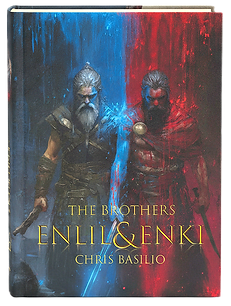
The Brothers: Enlil & Enki, Acts 1–6, especially:
“Immortal Sin” (comet and Great Deluge Field memory).
“Born Again” and “The Scholar” (Womb emergence and contact having Evadine).
“Never A Beautifully Written Poem” and “Sacrifice” (Igigi rebellion, human design, Alulim–Marduk duel).
Later war chapters under “Collision Course” and “Honor & Sacrifice” (Assembly debates and duel having Enlil).
ETCSL (Electronic Text Corpus of Sumerian Literature), hymns and myths to Enki/Ea (for traditional attributes of Enki as water and wisdom deity).
Lambert, W. G., Babylonian Creation Myths, Eisenbrauns, 2013.
Dalley, S., Myths from Mesopotamia: Creation, the Flood, Gilgamesh, and Others, Oxford University Press, 2008.


Comments