

Utu
Updated: Mar 22

Summary
Utu is a Higher Anunnaki, lord of the Sun and justice, master of the star‑ship that executed the Great Deluge strike, and later a key trainer and battlefield ally of Ascended humans.
Overview
Utu stands as one of the most senior operational Anunnaki. Traditional Mesopotamian sources present him as Shamash, solar deity and judge; the series keeps his roles as Sun lord and arbiter and extends them into spaceflight command and high‑risk Field operations.
He commands solar energy, illumination, and disclosure. On Earth he serves as both execution arm for Assembly decisions and later as moderating presence between strict Enlil‑style order and Enki‑driven reform. His sense of justice runs deep, yet he initially accepts Assembly rulings that result in large‑scale destruction. That tension shapes his later choices.
In the current cycle he holds three central functions: master of the Deluge strike vessel, senior combat trainer for Ascended humans in underground war, and moral reference in debates over how to apply the creed “Honor and Sacrifice”.
Details
Status and roles
Higher Anunnaki, Sun and justice portfolio.
Son of Nanna and Ningal, twin of Inanna.
Master of a major Anunnaki star‑ship during the Great Deluge.
Member of the Assembly, present during culling votes.
Instructor and front‑line supporter during the Mount Rainier campaign.
Abilities
Solar energy control
Projects concentrated light beams for attack or precision cutting.
Creates broad luminous fields for visibility, morale, or psychological impact.
Generates heat for sterilisation of hazards or containment of pathogens.
Field and ship command
Operates vessels that couple to the Quantum Field for navigation and targeting.
Uses harmonic alignment to lock on astronomical bodies such as comets.
Coordinates ship‑wide weapon systems that draw on Field fluctuations.
Perception and judgment
High acuity in reading emotional and ethical states.
Habit of hearing arguments from multiple sides before ruling.
In later war, evaluates human and Igigi conduct against an internal standard of justice rather than against old hierarchies alone.
Instruction and tactics
Teaches Ascended to use light, timing, and angles in tunnels for maximal effect and minimal collateral damage.
Reads battlefield geometry rapidly and adjusts formations in real time.
Personality
Serious and disciplined, but not joyless; early scenes show him as a more lenient presence during Enlil and Enki’s youth.
Feels deep responsibility for outcomes once he approves or executes an action.
Suffers long‑term guilt over his role in the Deluge, which drives him toward more protective uses of his power in the present era.
Respects clear, reasoned argument and evidence of personal sacrifice.
Shows willingness to overrule formal caution when saving lives in front of him, even during training.
Relationships
Enlil
Serves under Enlil’s mission command during the Earth resource campaign.
Executes Enlil’s Deluge order from the bridge of the Sun ship after obtaining verbal confirmation and accepting the burden verbally.
Later grows uneasy about repeated culling arguments but does not directly defy Enlil in Assembly until late war.
Enki
Maintains an older‑brother tone during the early mischief era, occasionally protecting Enki from harsher discipline.
Respects Enki’s knowledge of the Field and human design but questions some of his risks.
In the war era, often sides toward Enki’s caution regarding mass destruction and supports Ascended training efforts that stem from Enki’s program.
Inanna
Shares solar and justice themes in traditional lore; in this series, their direct interactions have not yet been central but family connection is acknowledged in codex.
Igigi and humans
Observes Igigi hardship during tunnel work and regrets that Assembly and Enlil delay meaningful relief.
After seeing Ascended protect both Anunnaki and humans at personal cost, he treats them as legitimate students and comrades rather than tools.
History
Mythic and pre‑Earth background
In classical Mesopotamian records, Utu/Shamash appears as:
Sun god, deity of light.
Judge in divine councils and disputes among humans.
Patron of travellers and warriors on daytime journeys.
The series incorporates this background and situates him among the earliest Anunnaki who map and enforce Field laws across multiple worlds.
Earth mission and Great Deluge
During the Earth mission:
Utu receives command of a major star‑ship that orbits or traverses the system.
The vessel houses sonic arrays and Field resonators that can lock onto specific astronomical objects.
In preparation for the Great Deluge:
Enlil and other lords present the case for a drastic reset, citing Field imbalance and human overreach.
Utu expresses hesitation but accepts the order after Enlil explicitly states that he will personally carry the burden.
He activates the ship’s harmonic arrays, tunes them to the comet’s Field signature, and fires a non‑visual beam that collapses the comet’s path into a lethal trajectory.
After the strike:
Utu reports “It is finished” to the command crew, authorising scientists to begin validation.
Witnesses, including Enki in Field memory, see him as solemn and shaken rather than triumphant.
The event becomes a constant reference point in his own ethical development.
Womb era and reawakening
When Anu orders retreat into the Womb of Creation:
Utu agrees and enters suspension along other Higher and Lesser Anunnaki.
His solar functions pass into a background state maintained by Field processes during dormancy.
Upon forced reawakening:
He feels the strain from Enlil’s high‑cost ritual and the accelerated timing.
He quickly senses that Earth’s Field has recovered substantially and that humans have progressed into dangerous and promising zones of science.
He resumes his role as lord of justice and Sun, now in a more crowded ethical environment that includes Ascended humans and Igigi veterans.
Modern war and training of Ascended
As conflict over human culling intensifies:
Utu takes part in Assembly debate and weighs Enlil’s call for culling against Enki’s call for shared stewardship.
He does not vote blindly; his traditional justice portfolio compels him to test claims against observed behaviour.
In the war that follows:
He trains Ascended in controlled use of light in tunnels: reflection planning, beam shaping, and target discrimination.
He arrives on battlefields where attacks threaten to overrun positions, using focused solar strikes to remove warlords or breaching obstacles.
He participates in rescue operations such as the extraction of Marduk and Igigi from compromised positions near Mount Rainier, often exposing himself to counter‑fire.
His injury in a later engagement, where he shields others and suffers Ley‑charged burns, demonstrates both vulnerability and commitment.
Mount Rainier and aftermath
During the Mount Rainier campaign:
Utu stands among senior Anunnaki who see Enlil’s and Enki’s duel as moment that will determine future policy.
He recognises the technique of the Hammering of the Forge and understands its usual finality.
When Enki survives the seven strikes, Utu realises that standard combat expectations no longer hold.
After Enlil steps into the Field fracture and stabilises it:
Utu supports recognition of Enlil’s act as full realisation of “Honor and Sacrifice”.
He supports the decision to admit humans into the Assembly, seeing this inclusion as requirement of justice and Field balance rather than concession.
Notes
Utu’s execution of the Deluge order places him in a rare position: both direct agent of mass destruction and later advocate of restraint. This dual status explains his nuanced stance in subsequent debates.
Ascended often respond well to his training style; he insists on discipline but shows respect for human limitations and avoids needless humiliation.
The shift from dispensing judgment on humans to working alongside them in battle marks a significant evolution from traditional Shamash depictions.
His injuries during Mount Rainier operations confirm that even senior solar lords can no longer assume invulnerability in close combat against Field‑aware enemies.
Citations
Codex entry Utu (in‑setting character profile).
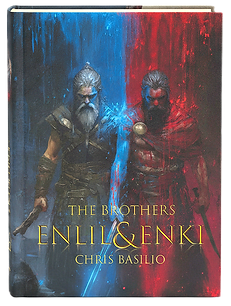
The Brothers: Enlil & Enki, especially:
Act 1, “Immortal Sin” (Great Deluge command sequence, Utu’s targeting and report).
Igigi and Assembly chapters that reference his justice role.
War and training chapters under “Collision Course” and “Love & War” (light training for Ascended, battlefield interventions, injuries).
ETCSL, hymns to Utu/Shamash (for traditional roles as Sun and justice deity).
Dalley, S., Myths from Mesopotamia: Creation, the Flood, Gilgamesh, and Others, Oxford University Press, 2008.
Black, J. and Green, A., Gods, Demons and Symbols of Ancient Mesopotamia, University of Texas Press, 1992 (entry on Shamash/Utu).



Comments