

Anu
Updated: Mar 22

Summary
Anu is the senior Anunnaki authority, sky‑lord, and head of the Assembly. He appoints Enlil and Enki to their Earth roles, authorises the Great Deluge and Womb retreat, presides over the renewed Assembly on human culling, and later loses direct access to the Field, becoming effectively mortal.
Overview
Anu stands at the top of the Anunnaki hierarchy. He governs Assembly procedure, appoints mission leaders, and defines broad policy for Field stewardship. In traditional Mesopotamian sources, Anu is the sky god and father of major deities; the series adopts that position and places him in direct relation to Enki and Enlil as their father and ultimate arbiter.
He rarely intervenes directly in single battles or minor disputes. His focus remains on long time scales, many worlds, and overall stability of the Field. Decisions carry enormous weight; he approves drastic measures only after extensive consultation, though those measures can include extinction events.
During the events in The Brothers: Enlil & Enki, Anu authorises human creation under constraints, permits the Great Deluge, orders the retreat into the Womb of Creation, and calls the post‑Womb Assembly that votes for a new human culling. A Field lash during that Assembly strips his divinity and leaves him as a non‑divine elder, which forces his sons and other Anunnaki to assume direct responsibility for enforcement.
Details
Status and roles
Supreme Anunnaki authority, head of the Assembly.
Sky‑lord in classical terms, associated in this setting to large‑scale Field oversight rather than atmosphere alone.
Father of Enlil and Enki and other Anunnaki not yet detailed by name.
Final judge in major disputes until his loss of active divinity.
Principal architect of Womb retreat policy.
Abilities
Before his loss of divinity:
Extensive Quantum Field command
Sense of Ley Line health across planetary surfaces.
Capacity to project stabilising or disruptive patterns on global or larger scales.
Authority over Anunnaki ranks
Power to assign missions, elevate or demote lords, and approve or block operations.
Assembly control
Ability to call, open, and close Assemblies and set procedural constraints.
After the Field lash:
Field sense drops to human‑level or below.
No access to previous power for direct intervention.
Influence remains only through experience, memory, and moral authority.
Personality and ethics
Deliberate and measured; avoids impulsive action.
Places Field integrity and Anunnaki survival above single species outcomes.
Accepts use of large‑scale sacrifice when he judges no other path exists.
Holds to formal neutrality in family disputes until circumstances force otherwise.
Willing to revise process when previous enforcement methods prove unsustainable, as seen in his refusal to act again as executioner after the Great Deluge.
Relationships
Enlil
Grants him command roles over Earth mission, warhosts, and administration.
Expects Enlil to carry out hard decisions, including flood and culling measures.
Later witnesses Enlil’s self‑sacrifice into the Field fracture from a mortal vantage point.
Enki
Assigns him to creation and science, trusting his capability in design and long‑term planning.
Expresses disappointment when Enki’s pranks and excesses cause risk, leading to stricter separation during youth.
Listens to Enki’s arguments during Igigi and human debates but does not always side in his favour.
Other Anunnaki and Igigi
Maintains distance; deals mainly through lords and representatives.
His presence in a hall signals that an issue has reached highest gravity.
Igigi rarely address him directly; their grievances usually focus on lower commanders such as Enlil.
Humans
Sees them as designed tools at first, not peers.
Authorises their creation and later their culling through Assembly processes.
Never interacts directly in the narrative, underscoring the indirect nature of his influence on human fate.
History
Early rulership and family
Anu’s earlier history predates the events presented, though traditional Mesopotamian sources and codex notes outline his long rule over the sky and Assembly.
In the series:
He raises Enki and Enlil in the palace, tolerating some mischief until an archive flood incident forces stricter control.
He decides to separate them for training: Enlil to war and authority, Enki to creation and science.
He sets a standard that lords must carry themselves according to “Honor and Sacrifice”, though he does not always apply this standard evenly across tiers.
Earth mission and Igigi conflict
When resource needs rise:
Anu identifies Earth as a key site for extraction due to its Ley Line network and material reserves.
He appoints Enlil as mission leader and Enki as chief scientist.
He receives reports on Igigi casualties and unrest, then presides over debates concerning relief and replacement.
During the Igigi crisis:
He hears arguments from Enki, Enlil, Igigi leaders, and other lords.
He authorises the Alulim–Marduk duel as a decisive mechanism to resolve the conflict and permit creation of a new species.
After the duel and Alulim’s death, he accepts the use of Alulim’s blood for human design and sanctions transfer of the Tablet of Destinies to Marduk.
Human creation and Great Deluge
Anu approves Enki’s work under constraints that Enlil urges:
Humans must remain smaller, short‑lived, numerous, and constrained in divinity expression.
He expects them to fill labor needs without repeating Igigi rebellion.
As human numbers rise and Nephilim appear:
He convenes a council where Enlil presents the case for a flood.
Enki argues for moderation; others present resource and Field data.
Anu concludes that a Deluge is necessary to protect long‑term Field stability and Anunnaki civilisation and authorises the operation.
After the comet strike and Flood:
He sees that the destruction serves the mission but leaves deep ethical and emotional damage on several lords, especially Enki.
He does not revoke the decision but later adjusts policy to avoid repeated reliance on similar solutions.
Womb retreat and hiatus
As Ley Lines degrade and resources thin:
Anu orders shutdown of outer holdings and concentration of Anunnaki in preparation for Womb entry.
He leads the retreat plan: ships return, Igigi suspend operations, Anunnaki abandon noncritical structures.
He presents the Womb as Sacrifice that grants Earth and other worlds time to recover Field balance.
He enters the Womb alongside all ranks, intending to wake when Ley output returns to safe levels.
Forced awakening and culling Assembly
After an extended period:
Enlil breaks out of the Womb and forces awakenings across the pantheon using portions of his own divinity.
The Field strain triggers Anu’s emergence earlier than ideal.
He calls a new Assembly:
Sets the agenda: assess Field status, human threat level, and Enki’s actions.
Listens to Enlil’s case for culling and treason charges against Enki, then to Enki’s defence and Igigi testimony.
Allows full debate and then calls the vote.
The Assembly votes for human culling by clear majority.
At that point Anu states that he will not enforce the sentence by direct intervention, citing his experience after the previous Flood.
Field lash and loss of divinity
Immediately after he refuses a second executioner role:
A spontaneous Field lash strikes him from above, impacts his chest, and hurls him against the Assembly hall wall.
His divinity drains in a single event, leaving no accessible Field anchor for his consciousness.
He recovers only as a mortal‑level being, aware but unable to sense or shape the Field.
He acknowledges the change:
Confirms that he no longer hears the Field.
Steps back from active leadership, stating that his sons and peers must carry consequences of their choices without relying on his power.
From that moment, he ceases to control the course of war directly.
Post‑lash period
During the subsequent conflict under Mount Rainier:
Anu remains absent from battlefields in functional terms.
Those who once depended on his presence must adapt to decisions without his stabilising influence.
His earlier insistence on letting those who demand culling enforce it themselves becomes a heavy directive on Enlil.
After Enlil’s self‑sacrifice into the Field fracture and the joint decision to admit humans into the Assembly:
Anu continues to exist as elder but no longer as god, a figure carrying memory and precedent rather than power.
Notes
The Field lash that removes Anu’s divinity can be read as an in‑setting indication that the Field rejects centralised, repeated use of single entities for catastrophic enforcement.
Anu’s refusal to act again as executioner forces the creed “Honor and Sacrifice” to move from rhetoric into practice for other lords.
His loss of power before final resolution means Enlil and Enki cannot deflect responsibility upward, strengthening the case for a more distributed Assembly that includes humans.
In contrast to many traditional mythic depictions, this series shows Anu’s authority subject to Field dynamics rather than immune to them.
Citations
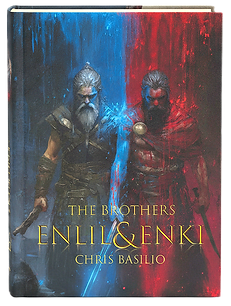
The Brothers: Enlil & Enki, especially:
Early palace scenes establishing Enlil and Enki’s upbringing and separation.
Assembly chapters around Igigi rebellion and the Alulim–Marduk duel.
Great Deluge decision sequence (Utu’s ship, comet steering).
Womb retreat planning and shutdown of holdings.
Renewed Assembly and culling debate, including Anu’s refusal to enforce and subsequent Field lashing back.
ETCSL, hymns and mythological texts featuring An (Anu) as sky god and head of the pantheon.
Lambert, W. G., Babylonian Creation Myths, Eisenbrauns, 2013.
Dalley, S., Myths from Mesopotamia: Creation, the Flood, Gilgamesh, and Others, Oxford University Press, 2008.



Comments